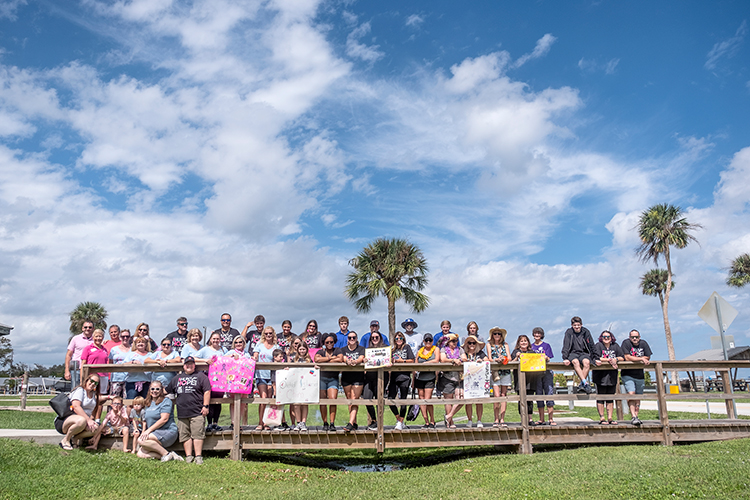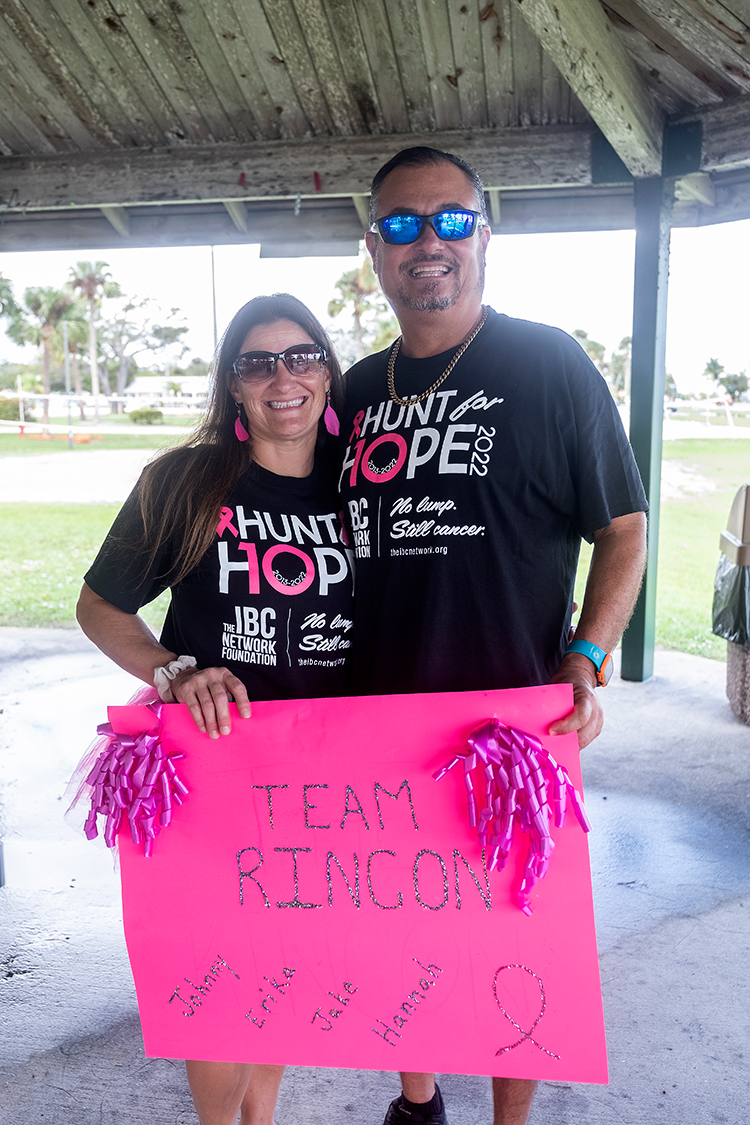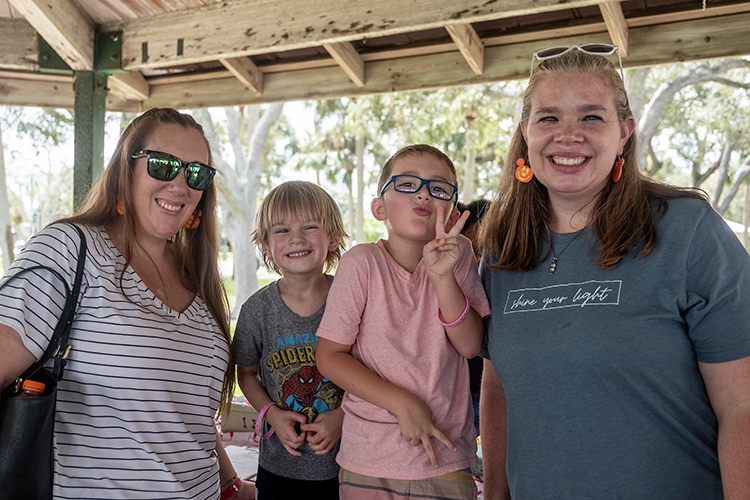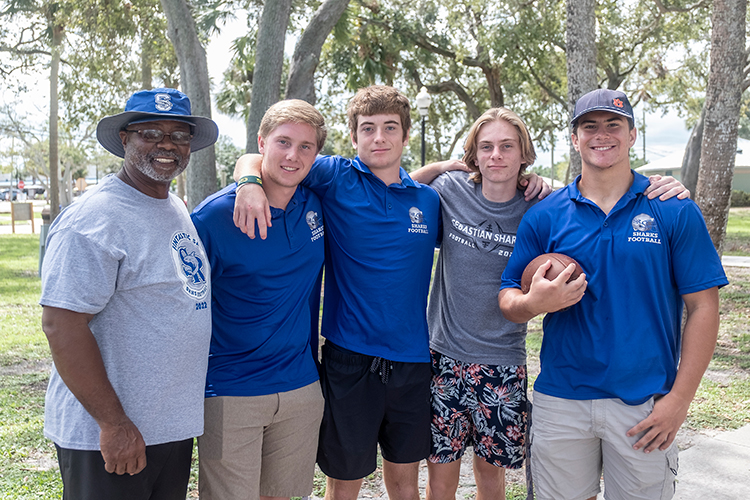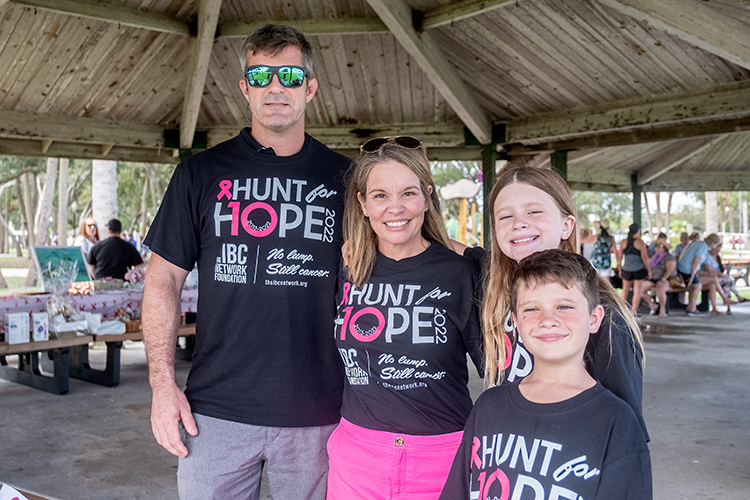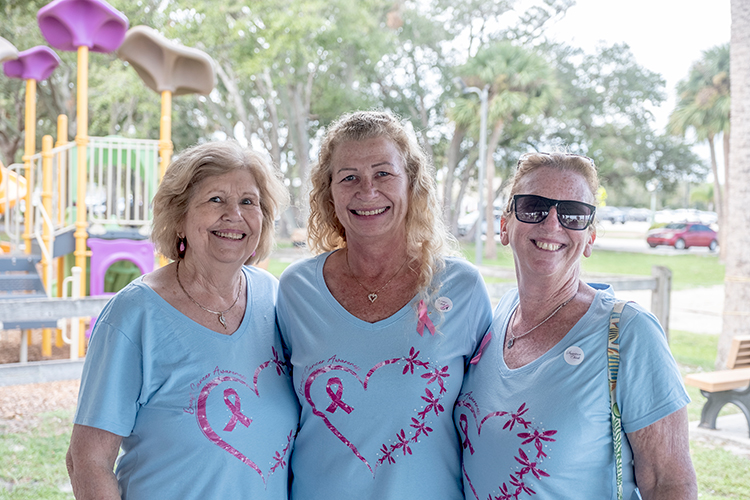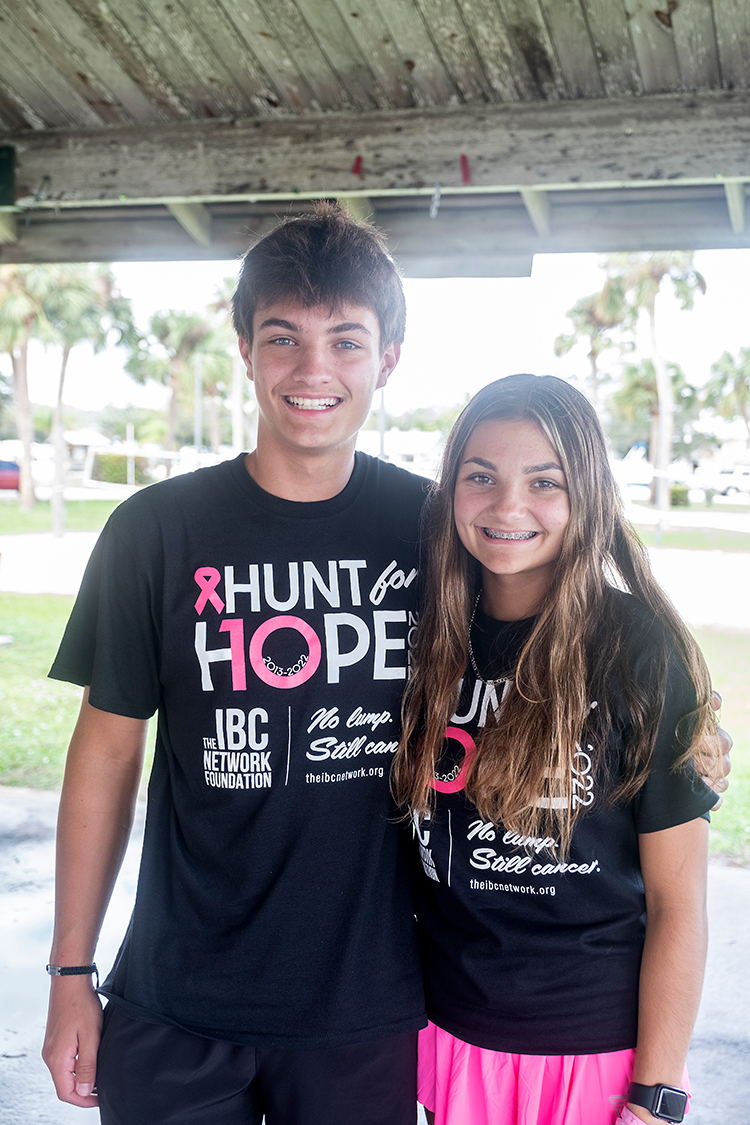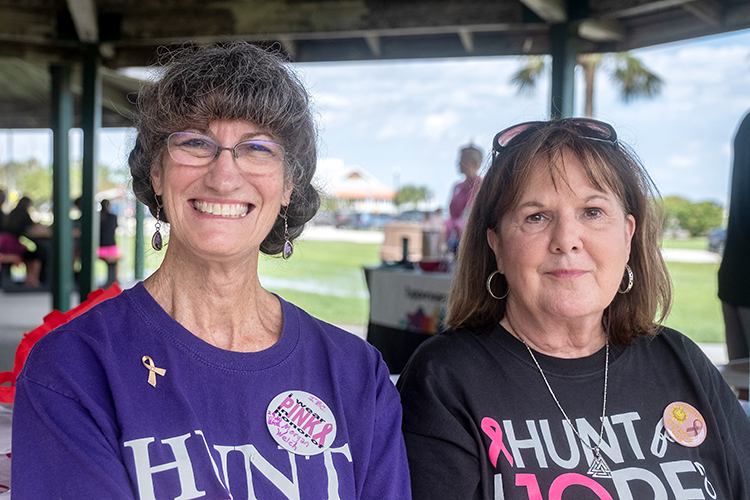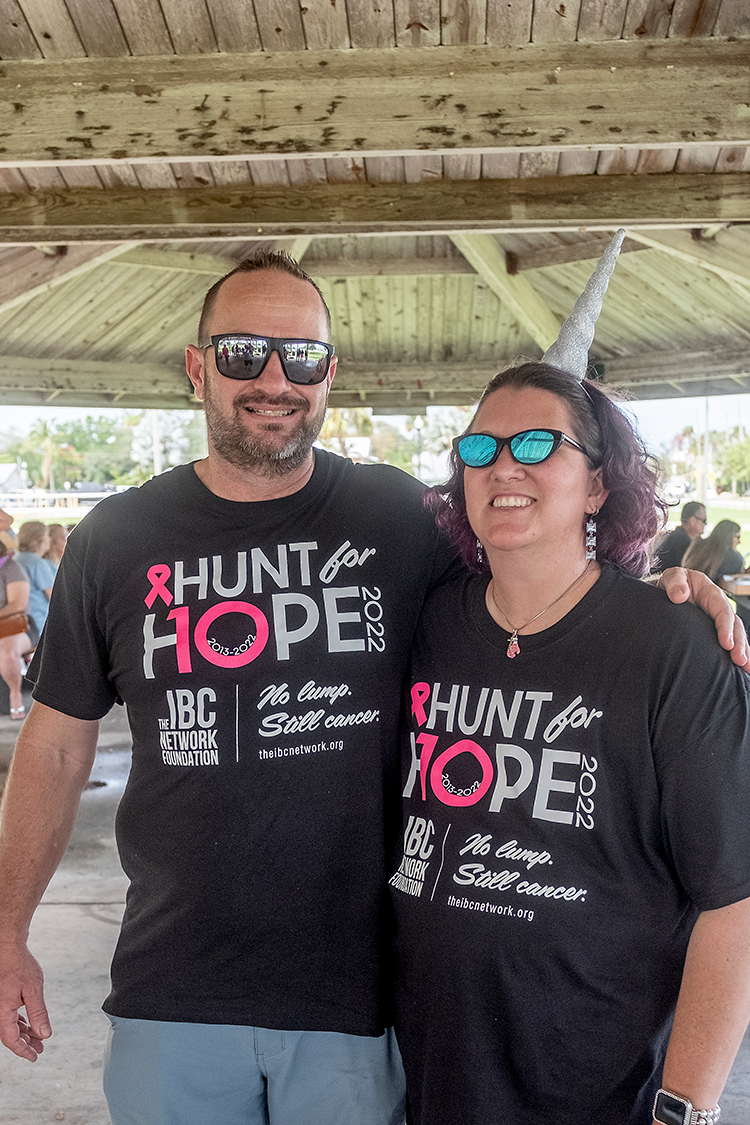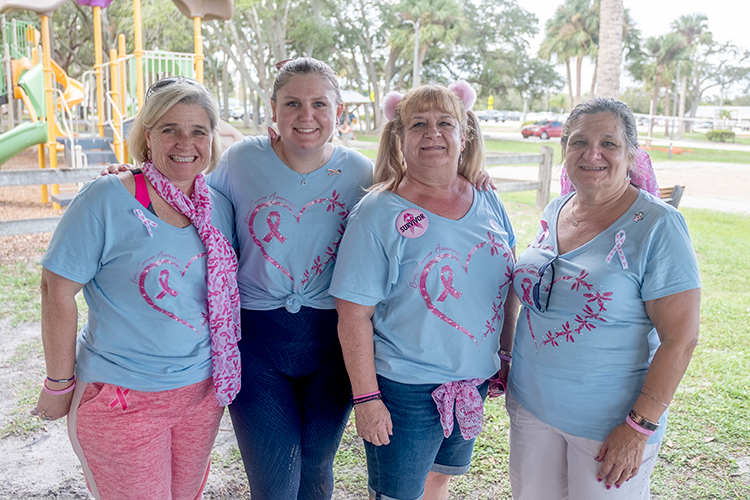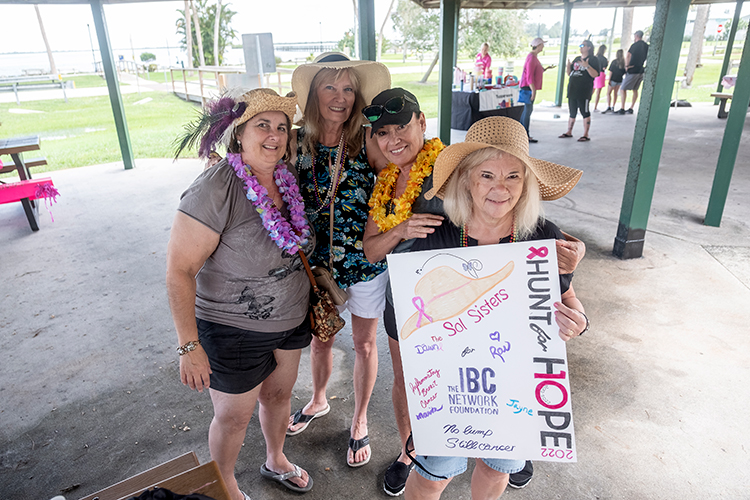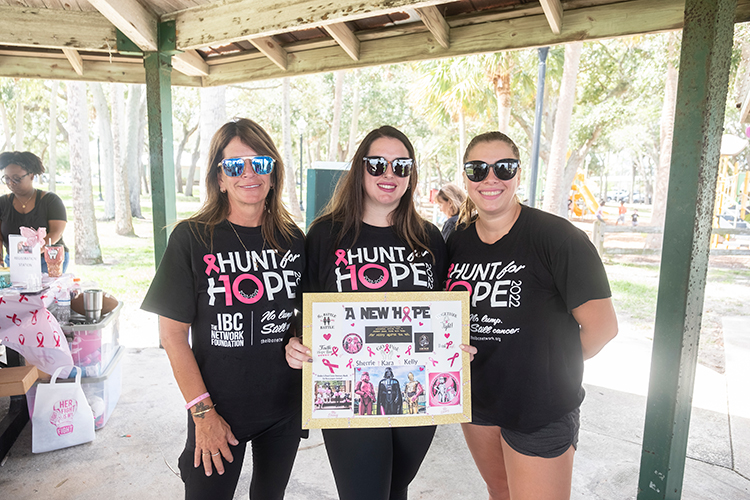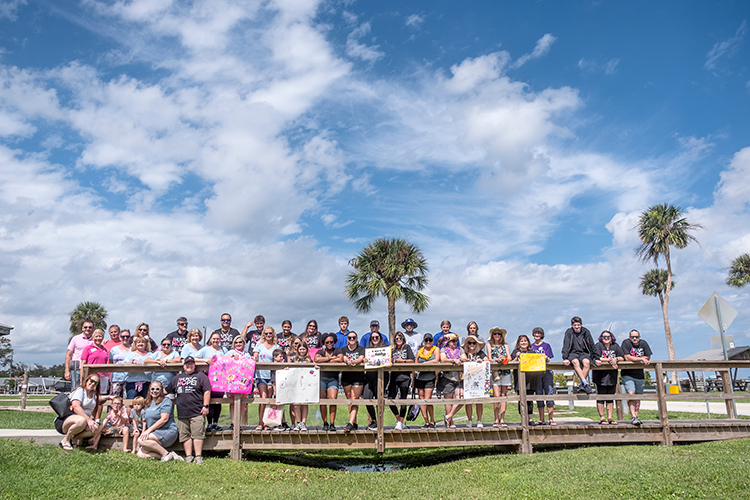
Those costumed men and women you may have seen wandering about taking pictures of themselves and performing various tasks at Sebastian businesses weren’t early trick-or-treaters, but instead were participants in the 10th annual Hunt for Hope Florida to benefit the IBC Network Foundation, which funds clinical research and treatments for Inflammatory Breast Cancer.
As in the past, teams met at the main pavilion at Riverview Park to get their scavenger hunt marching orders for Part 1. New this year, Part 2 featured team head-to-head competitions in the park following the hunt.
“One-hundred percent of what we raise goes to research for breast cancer, specifically inflammatory breast cancer,” said Dr. Holly Hamilton, owner of Riverside Family Dental
“But there’s a lot of crossover studies that they’re doing right now that benefits triple-negative breast cancer and some of the other forms of breast cancer.”
She said the all-volunteer IBC Foundation was formed in 2011, because at the time there was very little research into inflammatory breast cancer, a rare and aggressive form of cancer. She explained that IBC doesn’t present with a lump, isn’t found in a mammogram, typically occurs in younger women, and is frequently misdiagnosed, meaning that it can be Stage Four by the time it actually is correctly diagnosed.
Hamilton formed Hunt for Hope Florida in honor of her friend, Dr. Lori Grennan, a physician who began the first Hunt for Hope in Ohio while undergoing treatment for IBC, and who later died from it.
The research became particularly pertinent to Hamilton after she was diagnosed with triple-negative breast cancer, another very aggressive form that also tends to affect younger women.
According to breastcancer.org, triple-negative breast cancer is estrogen receptor-negative, progesterone receptor-negative and HER2-negative.
“A lot of the studies they are funding are crossover studies for me as well, so it’s very relevant to me,” said Hamilton, adding that IBC and TNBC treatment regimens are similar.
“They’re learning a lot through medications that they’re developing and there’s a lot of research going on. There’s a lot of good stuff,” said Hamilton. There is now a TNBC vaccine available, subsequent to her 2019 diagnosis.
“We continued having Hunt for Hope throughout all that time because it was that important to me. And it’s even more important now that I see the type of research that they’re doing that would be beneficial to anyone with it,” said Hamilton.
“They’re starting to do some manual therapy drugs and some other things, but as of now there’s still a lot of research that needs to be done in those fields.”
She commented that the larger cancer organizations are generally focused on mainstream cancers and are less inclined to fund research into cancers that are rare and/or that don’t have a good long-term prognosis.
“So there’s still a lot of funding for research needed,” said Hamilton.
For more information, visit TheIBCNetwork.org.
Photos by Joshua Kodis